



Decay—also called Early Childhood Caries—is a serious condition that commonly affects children under age 6.
At Norwest, we specialise in diagnosing and treating childhood tooth decay, ensuring your little one gets expert care. We offer treatment for children of all ages, including very young children or those with disabilities who require tailored treatment plans.
Early-stage decay can be difficult to detect, especially on back teeth. That’s why it’s important for your child to have frequent dental check-ups from the age of 1.
Decay usually starts in areas where teeth touch together and isn’t visible to the naked eye until later stages of cavity development.
It’s common for children to show signs of decay without experiencing any pain. So, if you notice any of the below, it’s time to book in a check-up.
These will often be found on the tooth at the gum line.
These spots are often near the gum line or between teeth.
These could look like grey or brown shadows or stains on or between teeth.
This may be a tooth that’s missing pieces, or an unusual-shaped tooth.
Redness will often be next to the gum or between teeth.
Non-visual signs usually show up in the later stages of tooth decay. It’s important to take action quickly if your child is experiencing any of the symptoms below.
Pain on the tooth, mouth or jaw could indicate decay.
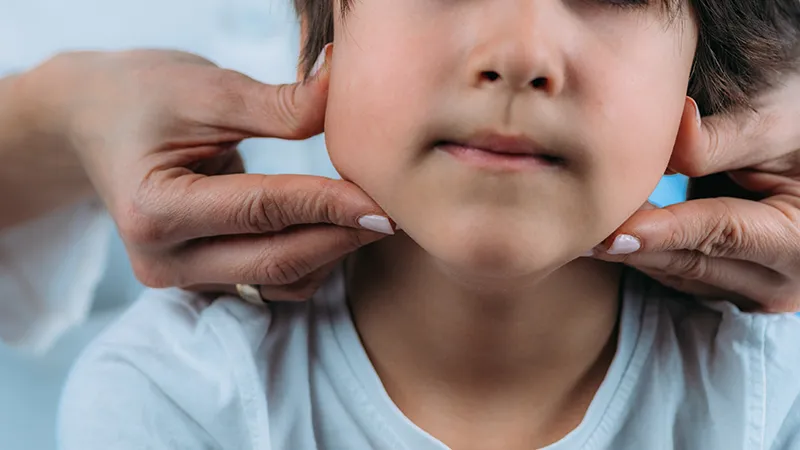
This may be swelling of the face or gums.
Your child is complaining often about food getting stuck between teeth.
Children between 2-4 years old are most at risk for decay starting, with signs often appearing as early as 12-18 months. Young children are particularly vulnerable to decay progression due to:
Frequent snacking and night feeds
Baby teeth having thinner enamel than adult teeth
Being less cooperative brushing teeth at home and with home oral care
Decay not being detected early due to difficulty cooperating at dental visits
By age 4, many kids have multiple cavities requiring treatment, which can often only be detected by a dentist.
Regular 6 monthly check-ups starting at age 1 are key for early detection, and are best done by a good general dentist experienced in treating young children.
Decay is diagnosed through:
Treatment depends on factors like age, cooperation, amount and severity of decay. Options include:
We aim to make each dental visit a positive experience for our little patients, so we tailor treatment to your child’s needs—using distraction, happy gas, or day-stay general anaesthetic for more complex cases.
If your child has tooth decay you may wonder, “Do we really need to fix them? Won’t they fall out soon?”
In some cases, no treatment is needed, and we’ll make a decision based on your child’s specific needs. However, there are often times when treatment will help restore your child’s oral health and ensure they are pain and disease-free.
This is typically when leaving the tooth untreated would lead to infection, pain and more dental complications, such as spacing issues for your child down the track.
If you suspect your child has tooth decay, visit your general dentist for an assessment and a referral to our clinic if needed.
It’s common for parents and carers to feel anxious, guilty, or overwhelmed if their child is diagnosed with tooth decay. But remember, you’re making a great choice in seeking help for your child – and childhood decay is a treatable, common condition, affecting around 40-45% of Australian children aged 5-6 years.
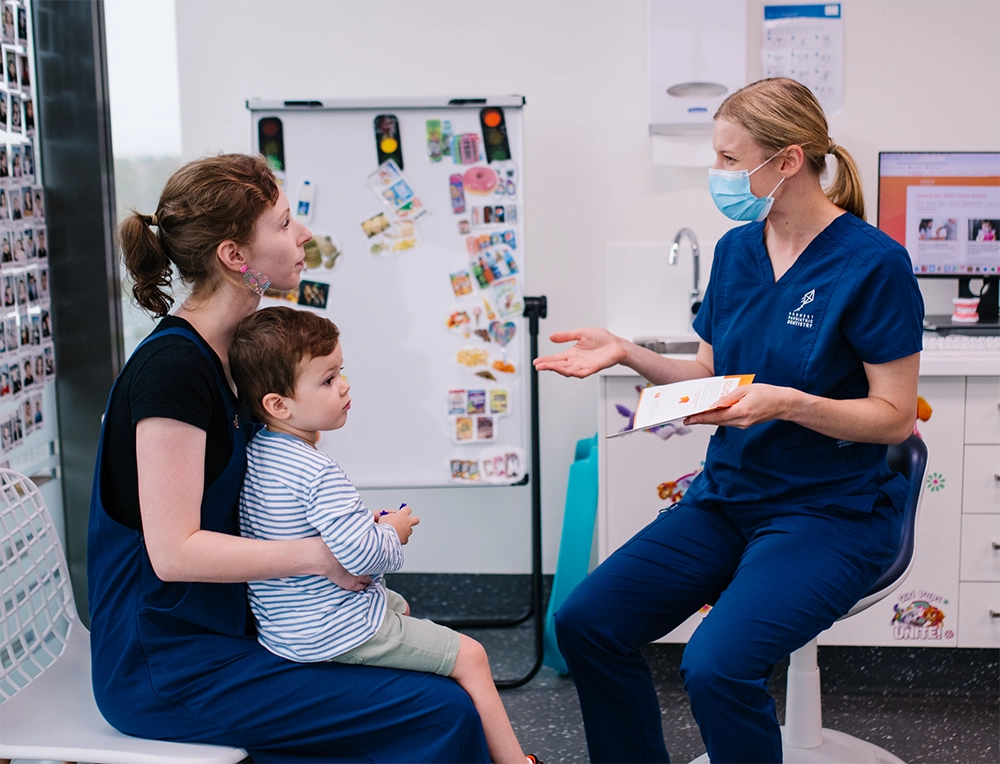
We understand the emotions you’re going through and will work with you as a team through this process, with clarity, clear treatment options and practical advice
Our team of paediatric dental specialists, surgeons, and oral health therapists work together to provide expert care for emergencies, complex conditions, and children with additional needs who may feel distressed or face challenges in a general dental setting.
Our focus is on creating a calm, positive experience where your child feels relaxed and supported. We’re here to help them with care and compassion every step of the way.

We’re here to guide you and your child with care and compassion at every step. We’ll explain what’s happening and the procedure thoroughly to you, and use age-appropriate language to help your child feel at ease and prepared.
Healthy habits start now. Download our free, expert-backed guide to protect your child’s smile – with tips on brushing, diet, and more.